


Why centralized fleet management matters
In many companies the fleet still runs in fragments: the vehicle list in one file, maintenance appointments in another system, accident records in email, and invoices in finance. That creates delay and the classic “who knows what?” gap.
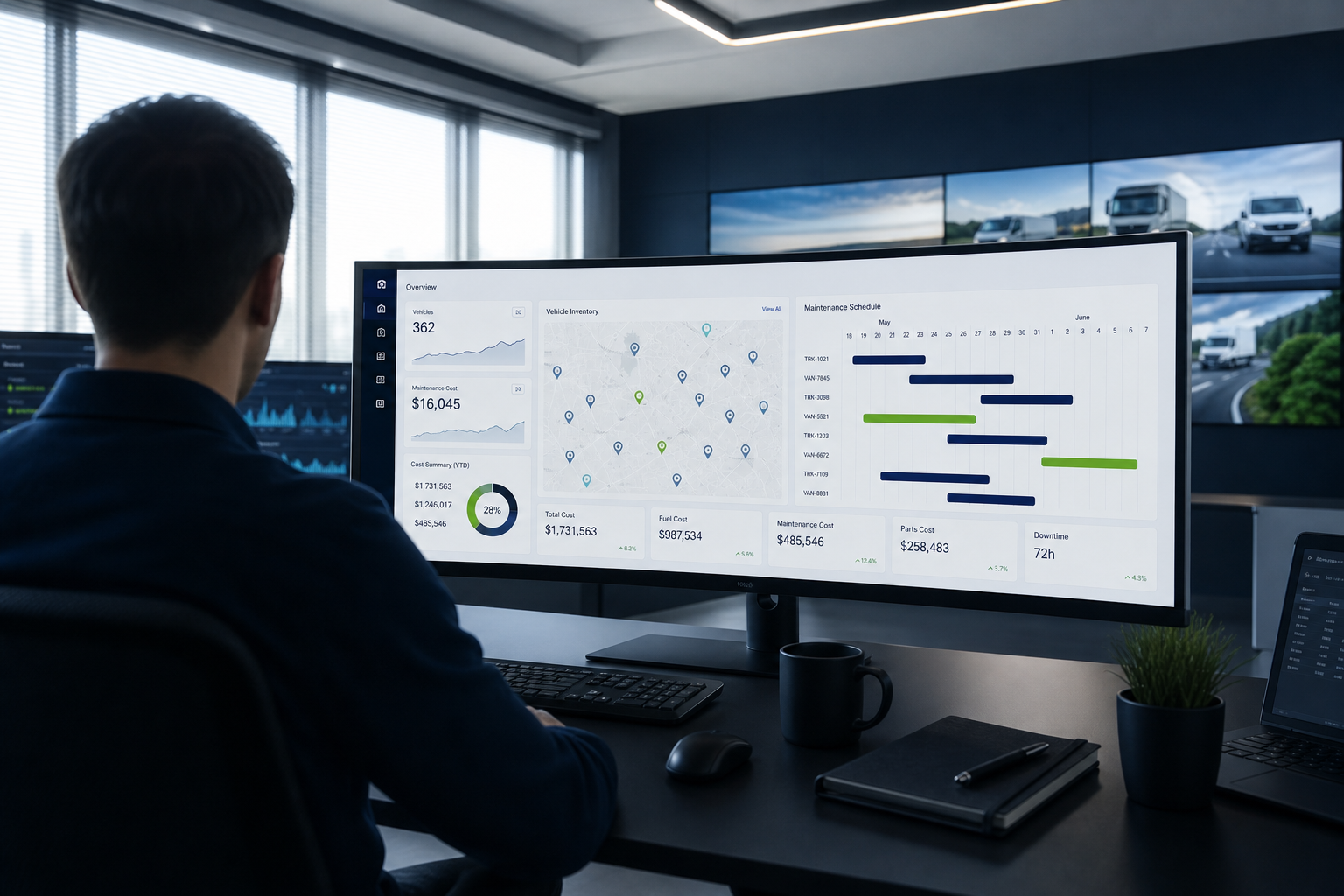
Centralized control does not mean cramming everything into one screen. The right approach is connecting inventory, contracts, maintenance, permissions, and cost on the same data backbone so operations can work day to day while leadership can decide in real time.
Which questions should a good fleet panel answer?
- How many vehicles are active right now, and how many are in service or idle?
- Which contracts are approaching their end date?
- Which vehicles are overdue for planned maintenance?
- Where are mileage, fuel, and damage costs rising by unit?
- Are driver and manager permissions clear, and who can access the data?
How to move forward in practice
The first step is cleaning the inventory. Without clear plate, model, contract type, usage purpose, and ownership, reports stay unreliable. Next, maintenance plans, damage workflows, and cost lines need to live in the same system.
FleetMole Manager brings vehicle, contract, service, and authorization workflows into one operating center. When Tracker adds field data and Smart connects damage and document flow, guesswork gives way to measurable control.
In the end, fleet management stops being a support function and becomes a management discipline that directly shapes cost, risk, and service quality.